Blog
What Is a Polypeptide? Peptide vs Polypeptide vs Protein Explained

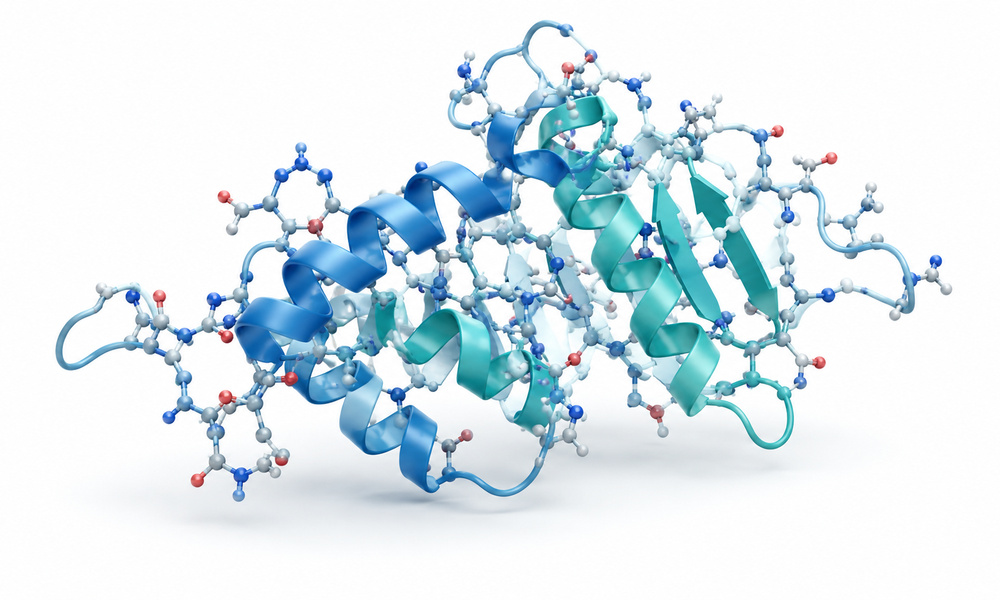
Updated October 2026 • 5 min read • Peptide-focused visuals aligned with Nerolta packaging
Polypeptide sits between simple peptide terminology and the broader world of proteins.
Chain length matters, but structure and function matter just as much.
This topic supports topical authority for the wider peptide education cluster.
If you search what is a polypeptide, you quickly discover a terminology problem: many sources use peptide, polypeptide and protein almost interchangeably. In casual conversation that may be tolerated, but in research and procurement it creates confusion. The terms describe related molecules, yet they point to different levels of structural complexity and different expectations around function.
A peptide is usually the simplest starting point: a relatively short amino-acid chain. A polypeptide is a longer chain of amino acids—still connected by peptide bonds—that may serve as part of a final functional structure or exist as a chain under study. A protein is generally a larger, often folded and functionally organized biomolecule whose biological activity depends on its higher-order architecture.
What defines a polypeptide?
A polypeptide is an amino-acid chain formed through peptide bonds. In many scientific explanations, the term is used when the chain is longer than what researchers would casually call a peptide, but not every polypeptide is discussed as a complete protein. The practical point is not a rigid word-count cutoff. It is whether the chain is being treated as a simple peptide, a larger chain, or a folded biomolecule with more complex structure-function relationships.
This is why educational content should avoid oversimplified definitions like “a protein is just a big peptide.” While there is a relationship, proteins often involve a much richer level of folding, interaction and functional architecture.
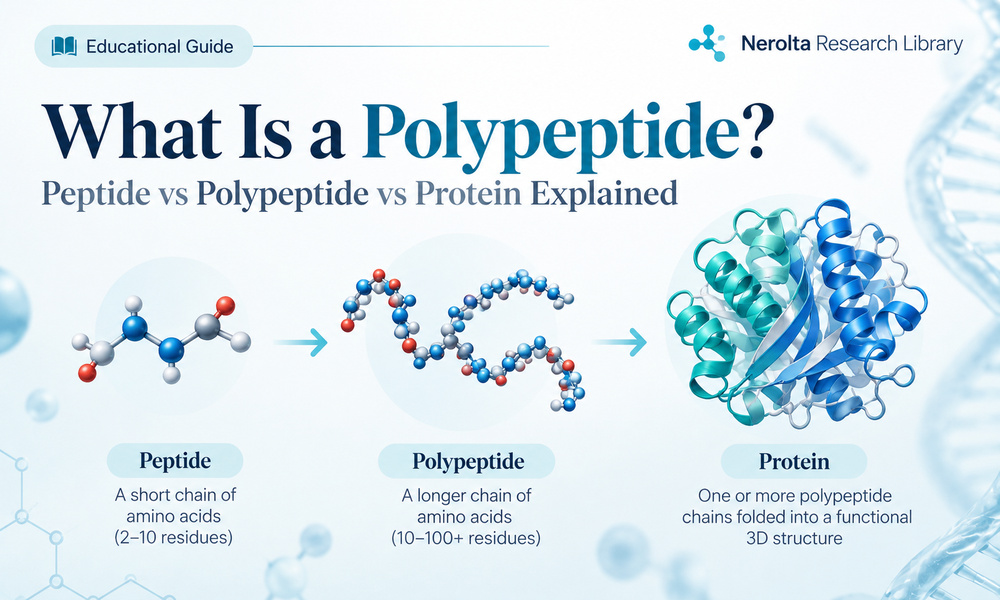
Peptide vs polypeptide vs protein
Peptide
Usually a shorter amino-acid chain. In commercial research contexts, the word peptide often refers to a defined research compound with a specific sequence and analytical profile.
Polypeptide
A longer amino-acid chain. Depending on context, it may be studied as a chain in its own right or as a precursor/part of a larger protein structure.
Protein
A more complex biomolecule whose function often depends on stable three-dimensional folding, multiple domains or interaction partners.
Understanding these differences helps interpret both scientific papers and supplier listings. A searcher trying to understand whether a given compound belongs in a peptide catalog or a protein discussion needs an explanation grounded in structure and function rather than vague size language alone.
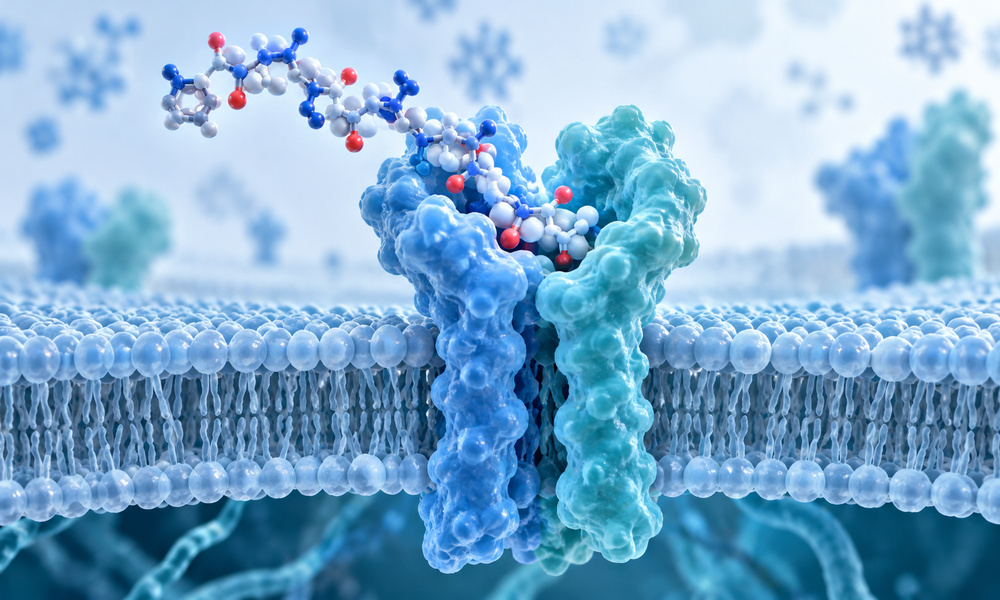
Why structure matters so much
As amino-acid chains become more complex, structural behavior becomes more important. Secondary structure, tertiary folding and interaction surfaces can radically change how a chain behaves in an assay. Even at the peptide level, conformation can affect receptor binding and stability. By the time researchers are discussing proteins, the importance of higher-order structure becomes central rather than optional.
What this means in laboratory buying and SEO content
From an SEO perspective, the value of this topic is that it attracts people who are trying to clarify concepts before buying or before writing about a product. From a research perspective, the value is precision. If a page teaches the difference correctly, it also builds authority for related topics like what are peptides, research grade peptides and supplier evaluation.
Common misconceptions
- Misconception: all peptides are proteins.
Better view: peptides, polypeptides and proteins are related but distinct categories. - Misconception: chain length alone explains everything.
Better view: folding, function and research context matter too. - Misconception: the terms can be swapped freely in supplier content.
Better view: inaccurate wording can create analytical or regulatory confusion.
Precision in language supports precision in sourcing
Educational queries around peptides and proteins often come from researchers trying to interpret product pages and experimental plans more accurately. The better the terminology, the better the sourcing decisions.
After clarifying the structural vocabulary, buyers can move into more practical questions around documentation, purity, traceability and supplier quality.
- Use structural terminology accurately when documenting compounds and experiments.
- Pair concept guides with analytical guides so category knowledge turns into better procurement decisions.
- Move from general learning into batch-level verification before ordering.
Why this matters for a laboratory buyer: the research question and the procurement decision should connect cleanly. A product page should make it easy to verify identity, presentation, current price and available batch information without relying on exaggerated outcome claims.
Before you order: make the product page part of the research record
Open the exact Nerolta listing and compare the compound name, current presentation, supplied form, storage wording, price and any available batch documentation against your laboratory SOP before purchasing.
After purchase, archive the order confirmation, lot identifier and supporting documentation with the experiment record. That creates a cleaner chain from literature review to procurement and makes reorders, troubleshooting and cross-lot comparisons easier.
Browse research compounds after reviewing the basics
Open the catalog to compare actual research compounds once the terminology is clear.
Browse compoundsWhat research grade means
Frequently asked questions
Is a polypeptide the same as a protein?
Not always. A polypeptide is a chain of amino acids, but a protein generally implies a more functionally organized, often folded biomolecule.
Why does this matter when buying research compounds?
Because accurate terminology helps researchers understand what type of material is being discussed and what sort of analytical expectations may apply.
Can a peptide become a protein?
The categories are connected conceptually, but in practice the distinction depends on size, folding and biological function rather than on a single simplistic rule.
Build on the fundamentals
Use this structural overview as a bridge into more practical guides on research-grade meaning, analytical testing and supplier selection.