
Blog
Peptide Purity vs Peptide Content: Why 99% HPLC Purity Does Not Mean 99% Peptide by Weight


Updated October 2026 • 6 min read • Peptide-focused visuals aligned with Nerolta packaging
Chromatographic purity is not the same measurement as peptide content by weight.
Water, counterions, salts and other non-chromophoric material can affect vial mass without appearing as target peaks in the same way.
Researchers should ask which method produced each number on a COA.
“99% purity” is one of the most common numbers on a research peptide product page. It is also one of the easiest numbers to misunderstand. When the value comes from HPLC, it usually describes the relative area of the target chromatographic peak compared with other detected peaks under that method. It does not automatically mean that 99% of the total powder weight in a vial is target peptide.
That difference matters for experimental reproducibility. A lyophilized peptide preparation can contain water, counterions, residual salts or other non-peptide mass that is not represented by a simple UV chromatographic peak-area calculation.
What a chromatographic purity percentage represents
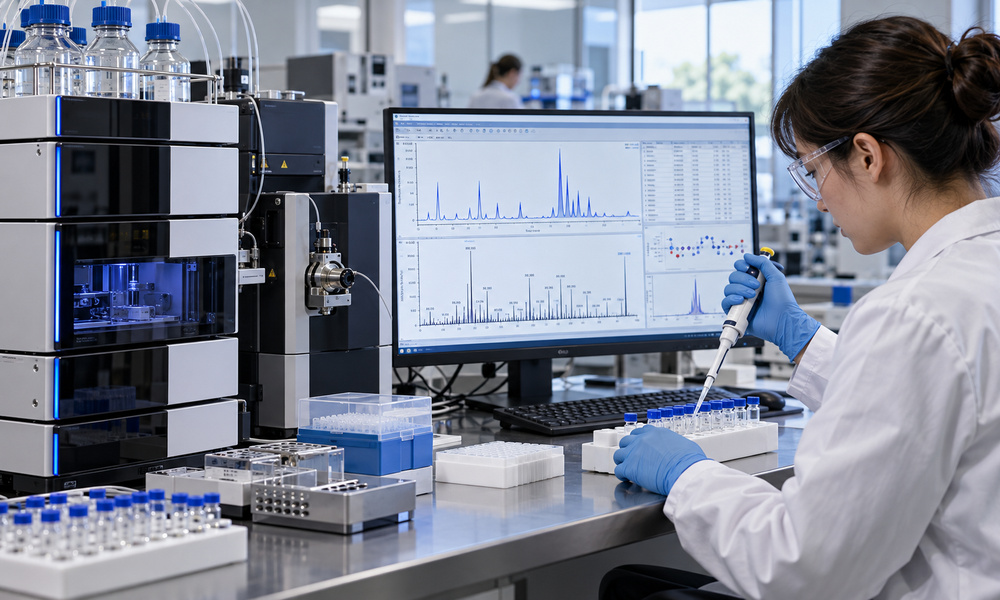
In a typical HPLC purity calculation, the areas of detected peaks are integrated and the main target peak is expressed as a percentage of the total integrated area. If the target peak accounts for 99% of that area, the chromatogram can be reported as 99% purity under the stated conditions.
That result is meaningful, but it is conditional on the analytical method. A detector only sees what the method is designed to detect. Some non-peptide components may not absorb strongly at the selected wavelength, may elute differently, or may require a separate analytical technique.
Why lyophilized mass can include more than peptide
Synthetic peptides are commonly isolated with counterions such as acetate or trifluoroacetate depending on the manufacturing and purification process. Lyophilized material may also retain varying amounts of water. These components can contribute to total vial mass without appearing as “peptide impurity peaks” in the way a reader might expect from an HPLC report.
For that reason, laboratories performing quantitative work should distinguish nominal fill, net peptide content and chromatographic purity. The exact terminology used on a report matters.
Identity is another separate question
Even a very clean chromatogram cannot by itself establish that the main peak is the intended sequence. Mass spectrometry or another identity method provides complementary evidence. This is why a strong analytical package often includes both chromatographic and identity data rather than a single percentage printed on a product page.
A practical example
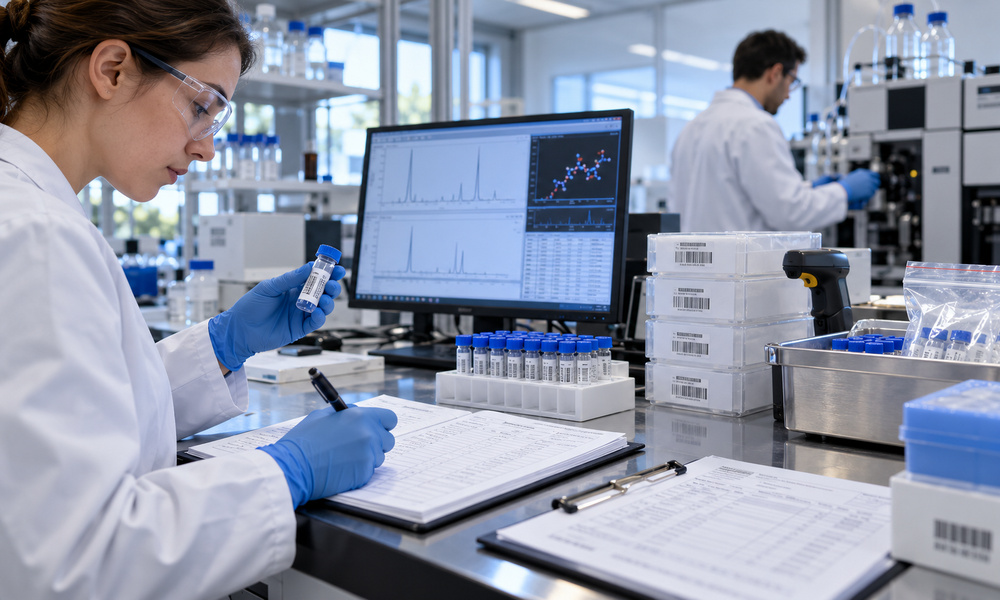
Imagine two research samples that both show 99% HPLC purity. Sample A and Sample B can still differ in water content, counterion level, net peptide content or even the confidence of identity verification. Their identical purity percentages therefore do not make them analytically identical.
This is not a flaw in HPLC. It is a reminder to ask the method the question it can actually answer.
What to look for in documentation
- Purity method: HPLC or UPLC conditions and a chromatogram when available.
- Identity: mass spectrometry or another appropriate identity test.
- Lot match: the report should correspond to the batch on the vial.
- Content or assay: if quantitative content is important to the experiment, look for a measurement designed to answer that question.
- Form details: supplied salt form and other relevant material information.
Researchers who want to read analytical records systematically should continue with HPLC vs LC-MS for Research Peptides and Peptide Lot Numbers & Batch Traceability.
Why the distinction matters for quantitative experiments
If an experiment depends on molar concentration, researchers eventually need to connect the weighed or stated amount of material to the number of moles of target peptide. Assuming that a 99% HPLC value equals 99% w/w can introduce systematic error when water, salts or counterions contribute meaningful mass.
This is especially relevant when comparing material from different batches or suppliers. Two batches can show similar chromatographic purity while differing in net peptide content. Without recognizing the distinction, an apparent biological difference could be partly analytical rather than biological.
Related terms that should not be collapsed
Purity usually describes the proportion of the target relative to detected impurities under a particular method. Identity asks whether the target is the intended molecule. Content or assay asks how much target material is present. Fill weight describes total material in the container. Those four concepts can overlap in everyday marketing language, but they are analytically different.
A good COA makes those distinctions visible. A good research protocol records which value was used in concentration calculations rather than treating every percentage as interchangeable.
Do not buy a percentage without understanding what it measures
A large purity percentage is easy to scan and easy to market, which is exactly why a researcher should slow down and ask what the number represents. Chromatographic purity can be useful evidence about the relative peak area under a defined method, but it is not automatically the same thing as peptide content by weight, vial fill amount, sterility or molecular identity. A stronger buying decision connects each claim to the method that produced it.
For Nerolta, the value is trust rather than hype: a qualified buyer should be able to move from the educational explanation to the current research catalog and judge the product information with the right questions in mind. Once the reader understands why “99%” alone is incomplete, the next useful step is the product listing where the actual material, presentation and available documentation can be reviewed.
- Read the method behind the reported purity instead of treating the percentage as a complete specification.
- Separate chromatographic purity, molecular identity and quantitative content in your procurement notes.
- When comparing suppliers, favor documentation that can be mapped to the exact lot rather than a generic quality badge.
Why this matters for a laboratory buyer: the research question and the procurement decision should connect cleanly. A product page should make it easy to verify identity, presentation, current price and available batch information without relying on exaggerated outcome claims.
Before you order: make the product page part of the research record
Open the exact Nerolta listing and compare the compound name, current presentation, supplied form, storage wording, price and any available batch documentation against your laboratory SOP before purchasing.
After purchase, archive the order confirmation, lot identifier and supporting documentation with the experiment record. That creates a cleaner chain from literature review to procurement and makes reorders, troubleshooting and cross-lot comparisons easier.
Apply the purity framework to a real product listing
Open the Nerolta research catalog and compare the current product specifications with the questions in this guide before selecting material for a laboratory project.
Browse the research catalogLearn how to read HPLC vs LC-MS
Frequently asked research questions
Can a vial be 99% HPLC pure but contain less than 99% peptide by total mass?
Yes. Water, counterions and other non-peptide mass can contribute to the lyophilized material while not appearing as target-related chromatographic impurity peaks in the same way.
What measurement matters for molar calculations?
The relevant value is the amount of target peptide actually present. The appropriate assay depends on the material and experiment; a simple chromatographic purity percentage should not automatically be used as a mass-content value.
Is fill weight the same as peptide content?
Not necessarily. Fill weight describes total material placed in the vial, while peptide content refers to the amount of target peptide within that material.
Evaluate the batch, not just the headline number
Nerolta Labs lists research compounds with product specifications and batch-oriented documentation so laboratory buyers can evaluate more than a single purity claim.


One thought on “Peptide Purity vs Peptide Content: Why 99% HPLC Purity Does Not Mean 99% Peptide by Weight”
Comments are closed.